
About Schumacher College
Schumacher College is boldly experimenting in transdisciplinary education and research; delivering transformative learning experiences, whilst also exploring how holistic education can respond most effectively to what the world needs in this crucial moment in time.

Our Transition
The pioneering vision that has been expressed through Schumacher College’s holistic education since its very first course in 1991 here in South Devon - a five week tour de force on Gaia Theory led by James Lovelock – is now engaged in a deeply transformative journey. We, the recent faculty, staff, volunteers and alumni from Schumacher College, have unexpectedly found ourselves needing to move away from our home of more than thirty years and to set out into the world around us. This uprooting was unplanned and not entered into by choice. It has, therefore, been challenging for all involved to come to the sober recognition that a much-loved chapter of life and learning has now come to an end.
When viewed through a holistic, ecological, or spiritual lens, however, life herself teaches us that every ending is in fact a new beginning of some kind - and our story is no different. A core team of ex-staff, students and volunteers from Schumacher College, representative of its early, middle and later years at the Old Postern in Dartington, are choosing to see this unexpected uprooting as a gift - a unique opportunity from which to allow this rich 34 year legacy of holistic, ecologically-oriented education to see itself, and the vast, broader learning ecosystem that has grown out of and around it, with fresh new eyes.
-
We feel wholeheartedly that the winds of change are behind us, and that these wildly strewn seeds we are carrying have wings! We have already received so many incredible acts of support; from our amazing alumni, from friends old and new, and, of course, from the outstanding guest teachers and trailblazers from across the world who have been animating these transformative learning experiences for the past three decades.
Our dream is ultimately to create the best possible conditions for a new beginning to emerge here again on the land of South Devon, culminating in a new physical home for Schumacher College-inspired learning. To honour the gift of leaving home and the spirit of a vision quest, however, we do not want to settle into a new shape or form prematurely. We strongly feel that it is time to spread our wings and to immerse ourselves in life, outside of the internal and external boundaries of familiarity and comfort.
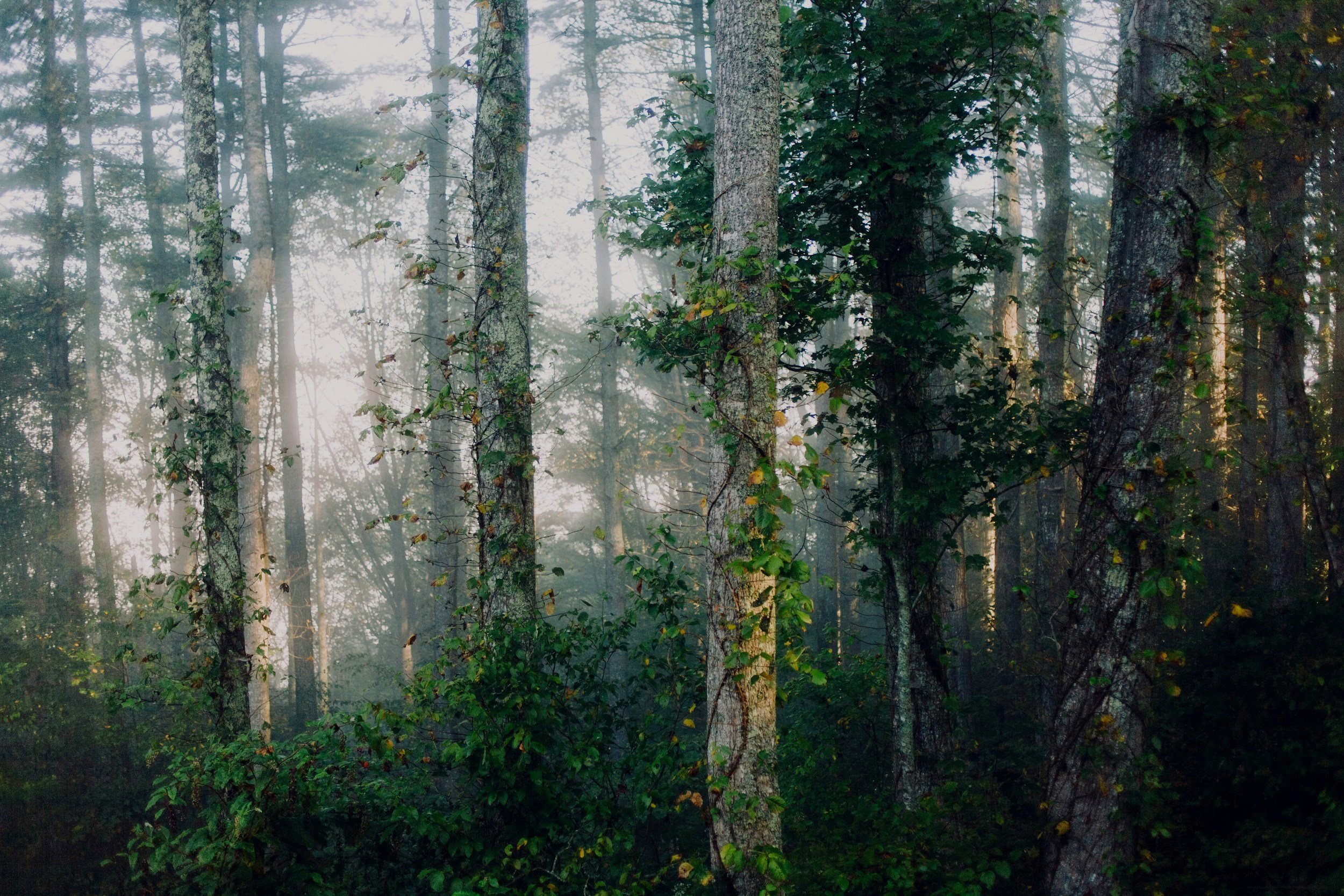
We are therefore going ‘wild’ for a time, just as the thousands of past Schumacher students have done before us. We aim to integrate this wildness into the emerging future of Schumacher College-inspired learning here in Devon, and beyond. Our Schumacher Wild adventure will involve taking the recent staff and faculty’s transdisciplinary educational offerings ‘on the road’ for a year or so, such as the New Schumacher Foundation Programme, a critical alternative to traditional forms of accredited Higher Education, and its connected Foundation Seed course. As well as hosting fresh and familiar short-courses in new places, such as the Radical Love short course. We aim to remain true to the essence of Schumacher College-inspired teaching and learning, whilst also being bold and experimenting with it! At the same time, we will be entering into a collective process of action-research, to ask and to listen carefully to what the world, both locally and globally, needs most from critical, holistic education now. We do not want to rest on our laurels or presume that we know what this is. The overarching aims of Schumacher Wild are therefore, to explore, to learn, to engage, to innovate, and to grow - in order to be of service to the world, and an emerging Ecological Paradigm, like never before.

Our Direction of Travel

We encourage transformation within the individual so that they can be of service to themselves and others.
We ask:
What kinds of knowledge, skills and learning environments do individuals, communities, and leaders need to address the challenges of the 21st century?
How can we reimagine our curriculums, learning activities and educational environments to better meet those needs?
How might we make that learning more accessible, innovative, and inclusive?
How can we work together to de-centre the knowledge hierarchy that still remains at the centre of most modern societies and educational institutions?
Our People
-
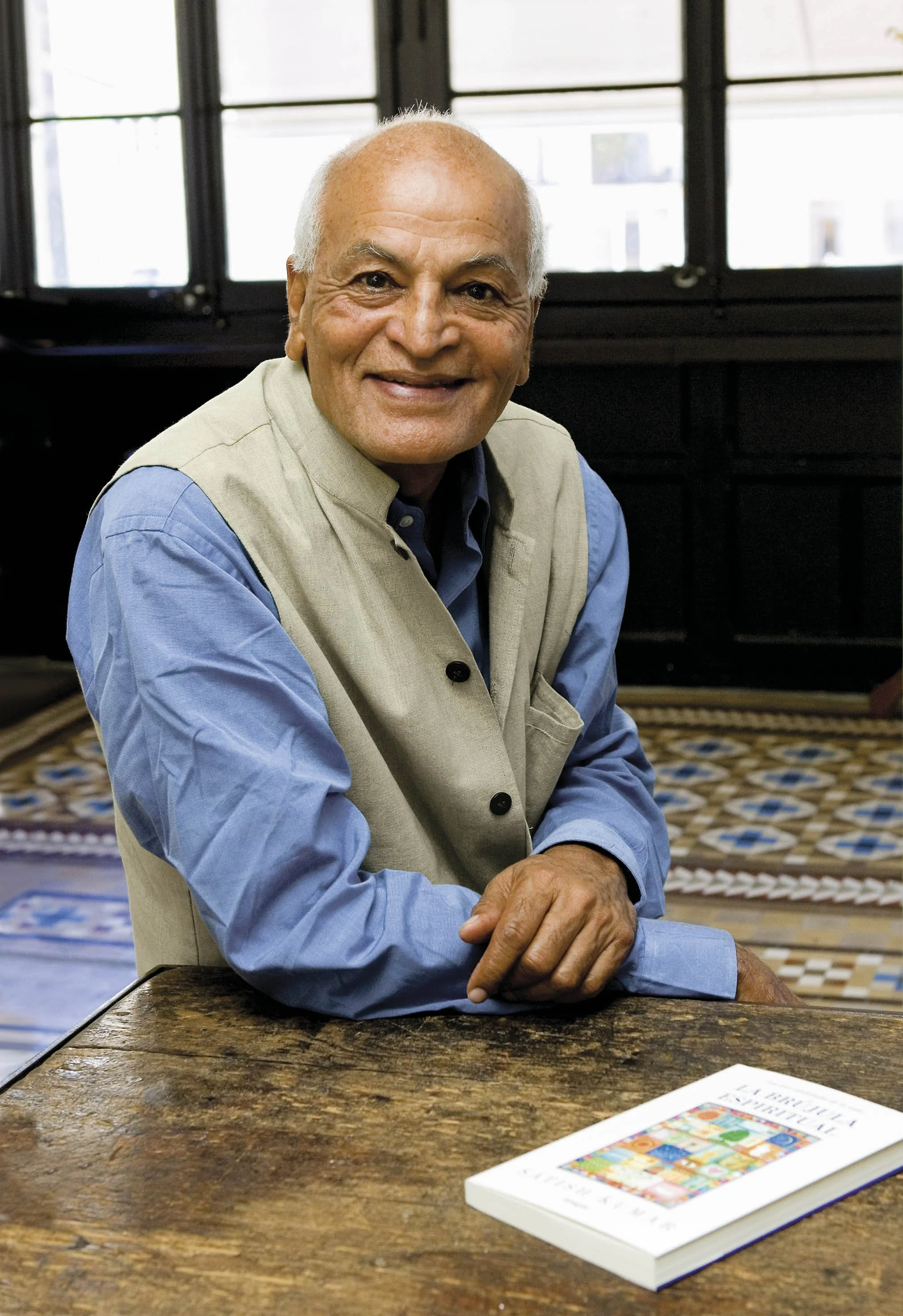
![Smiling elderly man sitting at a wooden table with a book in front of him, in a room with large windows and a tiled floor.]()
Satish Kumar
-
![Close-up of a woman with light skin, blue eyes, and brown hair tied back, smiling slightly.]()
Dr Rachel Sweeney
-
![A smiling woman with dark brown hair and blue eyes, wearing a navy turtleneck sweater, standing outdoors in front of a tree with yellow-green leaves.]()
Dr Emma Kidd
-
![A woman with long, dark hair smiling, wearing a tan turtleneck sweater.]()
Dr Mona Nasseri
-
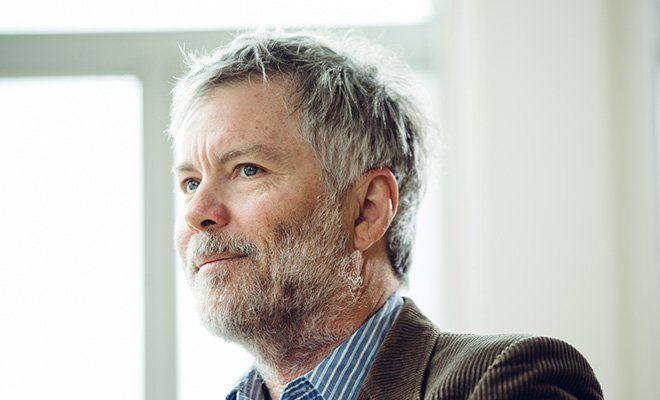
![Close-up of a mature man with gray hair and beard, looking thoughtfully to the side, in a well-lit room.]()
Jay Tompt
-
![A man with light blue eyes and brown hair looking to the side outside in a park with green trees in the background, wearing a blue jacket and a striped shirt.]()
Dr Valentin Gerlier
-
![A woman with shoulder-length wavy hair wearing glasses and hoop earrings, looking directly at the camera indoors.]()
Emma Bush
-
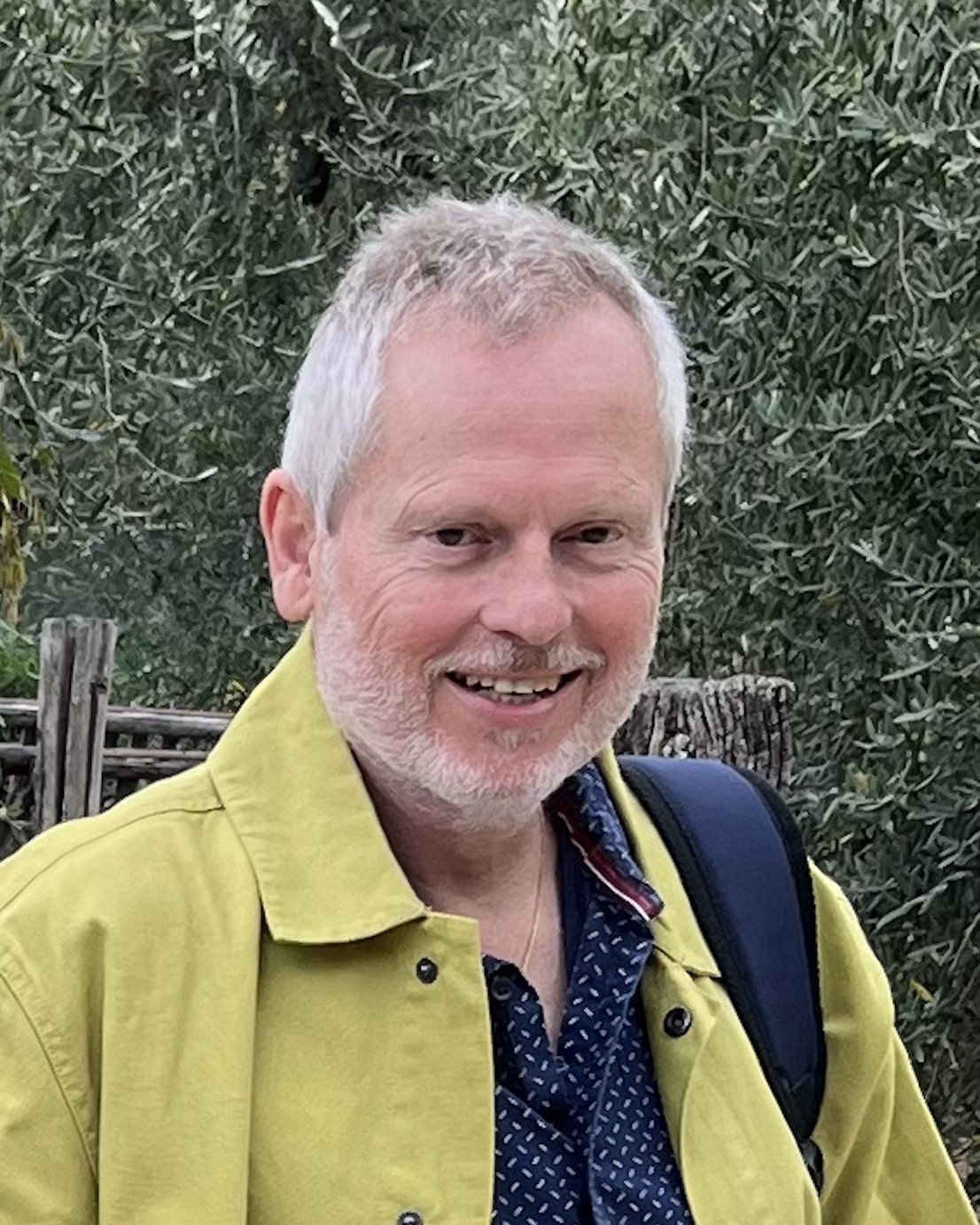
![A smiling man with gray hair and a beard, wearing a yellow jacket over a blue patterned shirt, standing outdoors with greenery in the background.]()
Prof Roberto Fraquelli
-
![Black and white portrait of a woman with shoulder-length dark hair and light eyes.]()
Alice Oswald