

Poetics of Imagination
A Course in Story, Poetry and the Oral Arts
September 2026 – April 2027
New Season : Exploring the Divine Comedy
Poetics of Imagination is a unique, innovative course that bring together artistic creativity, poetic wisdom and philosophical inquiry. Delving into myths, drama, wisdom traditions, story and poetry, we draw from their unique goodness and enduring relevance and unleash the extraordinary energy they have to offer the world of today.
Sign up for module 2 beginning 22 January 2027:
Key Information
-
Module 2 will be held at a venue in Umbria, Italy.
-
In-person residency dates:
Module 1: 18 - 28 September 2026
Module 2: 22 Jan - 1 Feb 2027
Module 3: 5 -17 April 2027
Please Note: The deadline for both bursaries and course applications is 9th August 23.59 BST
-
The full cost of the course is £5,700 (including food and a shared room). For single room fee, please contact info@schumachercollege.co.uk. Single rooms are limited and allocated on a first come, first served basis.
We also have the option of pay for standalone modules: Module 1- £2200, Module 2 - £2200, Module 3 - £2500.
-
This course is structured over 3 modules, of which comprise of both in-person and online compotents.
In-person residencies run for 10-12 days at the beginning of the module and are followed by 6 online sessions to complete the module.
Marrying practice with reflection and creativity with inquiry, we will explore epochal myths, track poems on the land, converse with the flow of rivers and learn from the timeless, astonishing resources that lie deep in the wellspring of the imagination.
This course uniquely draws on the gifts of the oral arts as a source of inspiration for future generation of thinkers and artists. No previous experience is necessary: we welcome deep thinkers, writers, storytellers, songwriters, activists, craftspeople, farmers, dreamers and students of all backgrounds and paths in life.
Offered in the caring and convivial spirit of Schumacher education, Poetics of Imagination is an extraordinary opportunity to explore the poetic imagination as a unique pathway into what makes us human, and thus singularly entangled with others and with the more-than-human universe.
This course takes place both in person and online, dates for the in person residencies are:
Module 1: 18 - 28 September 2026 (Rill Estate, South Devon)
Module 2: 22 Jan - 1 Feb 2027 (Umbria, Italy)
Module 3: 5 -17 April 2027
*There will be 6 online sessions after each residential module
Costs:
Module 1- £2200, Module 2 - £2200, Module 3 - £2500, Full programme - £5700 (including food and a shared room).
For single room fee, please contact info@schumachercollege.co.uk. Single rooms are limited and allocated on a first come, first served basis.
Bursary funds
-
Bursaries are intended to provide financial support to applicants in need who wish to join the Poetics of Imagination Course to inspire their wider community and enrich the course with their unique contributions. We hope that our bursaries will encourage a diverse range of participants. However, the competition is strong and the number of bursaries available is limited.
Please note:
Bursaries are awarded on the basis of financial need. This may require additional eligibility checks following an initial application.
The bursary application deadline is 9 August 2026. Please ensure that your course application is submitted before this date.
Please note that a course application must be completed before a bursary application can be considered.
A bursary application must be submitted in addition to a course application.
What's included:
A bursary award will cover part of the cost of the course, food and accommodation .
Travel to and from the course is the responsibility of the bursary recipient. unfortunately, We cannot provide financial assistance with travel
The application deadline is 9th August 2026. Please note that your bursary application will only be considered if you have submitted a course application.
If you think you are eligible for a bursary fund, please complete the application form below:
Season 2026 - 2027 – Exploring The Divine Comedy
Described by the poet Osip Mandlestam ‘as a perfect crystal with 14,233 facets’, Dante’s great epic poem is a visionary encyclopaedia of the universe, exploring what it means to be, to love, to create and to bring goodness to one another and to the world.
A creative and original take on Dante’s great work, this course performs a poetic and transformative journey across time and space. Like Dante’s work, we will weave together myth, poetry and philosophy, learn astronomy and cosmology, play and sing music, and explore the narrative foundations of politics, justice and ecology. This course navigates Dante’s extraordinary cosmic mindmap to release its creativity, healing and transformative powers.
To help our orienteering, we will be exploring a wealth of other wondrous materials: from medieval romances, Celtic myths, ballad traditions, Sufi poetry, Noh theatre, mystical writings, polyphonic vocal music, contemporary drama – and many others.
Combining lectures with storytelling, poetry readings with walks and explorations and the classroom with the wild, this course will bring an epic, timeless great journey to timely power and relevance.
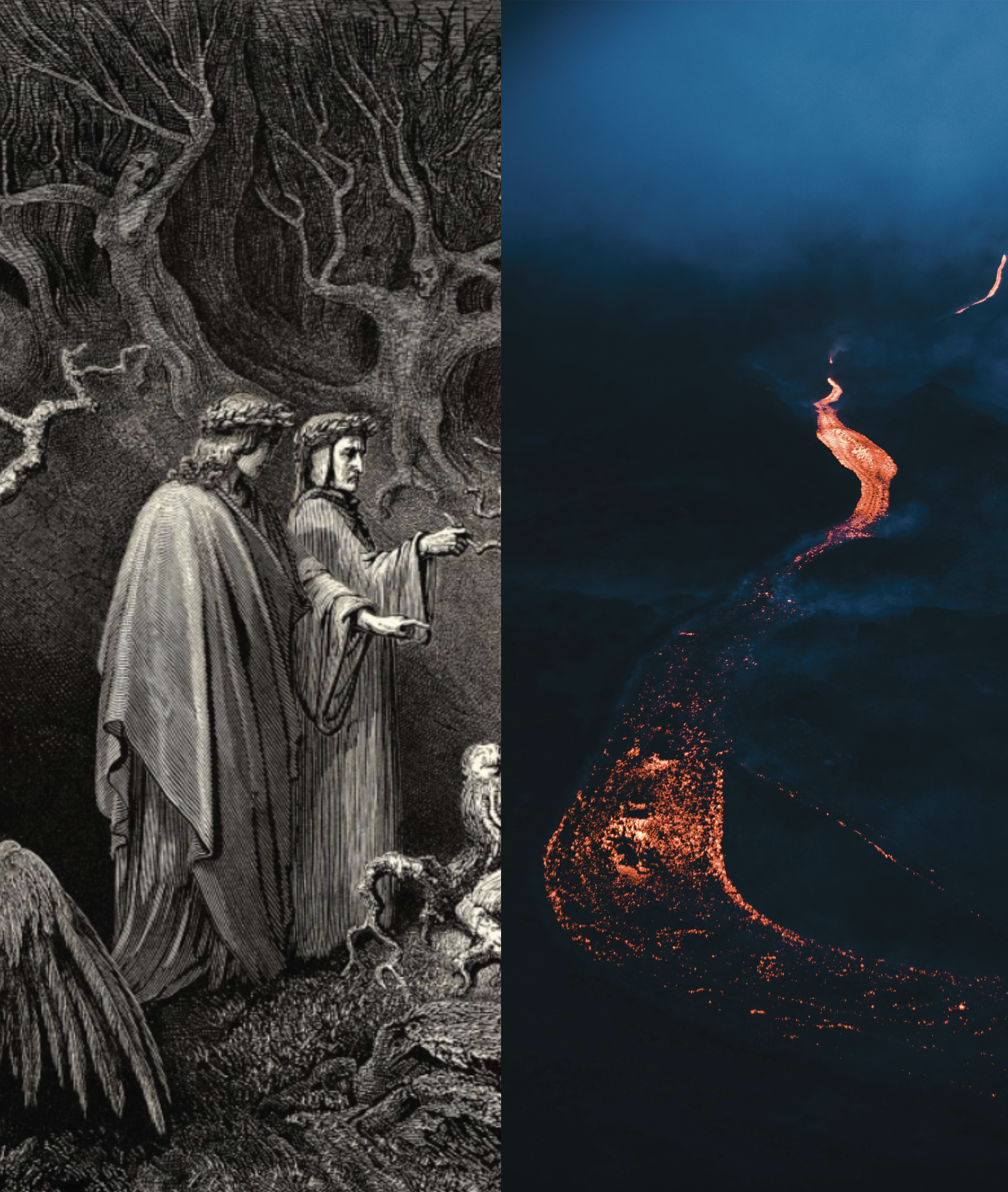
Module 1 - Underworld
Residential: 18th - 28th September 2026, Rill Estate, South Devon
Accompanied by his poet-guide Virgil sent by his beloved Beatrice, Dante begins a journey that will take him straight to the heart of Inferno, ‘Hell’ itself. Along the journey he encounters fallen heroes, ancient philosophers, old friends, bereaved fathers, forlorn lovers and ancient creatures of legends, and discovers what happens when ambitions to power begin seek control over our abilities to love one another and the world.
Following Dante and Virgil’s lead, this module begins the great journey, visiting the underworld with the help of poets, musicians and storytellers. Such travels will tell us about the necessity of confrontations with suffering and lament, but also what surprising regenerative potencies can be encountered even in darkest times. Why is there a timeless connections between stories and the coming of winter, and what does it reveal about our ability to face crisis, to offer hope and engender renewal?
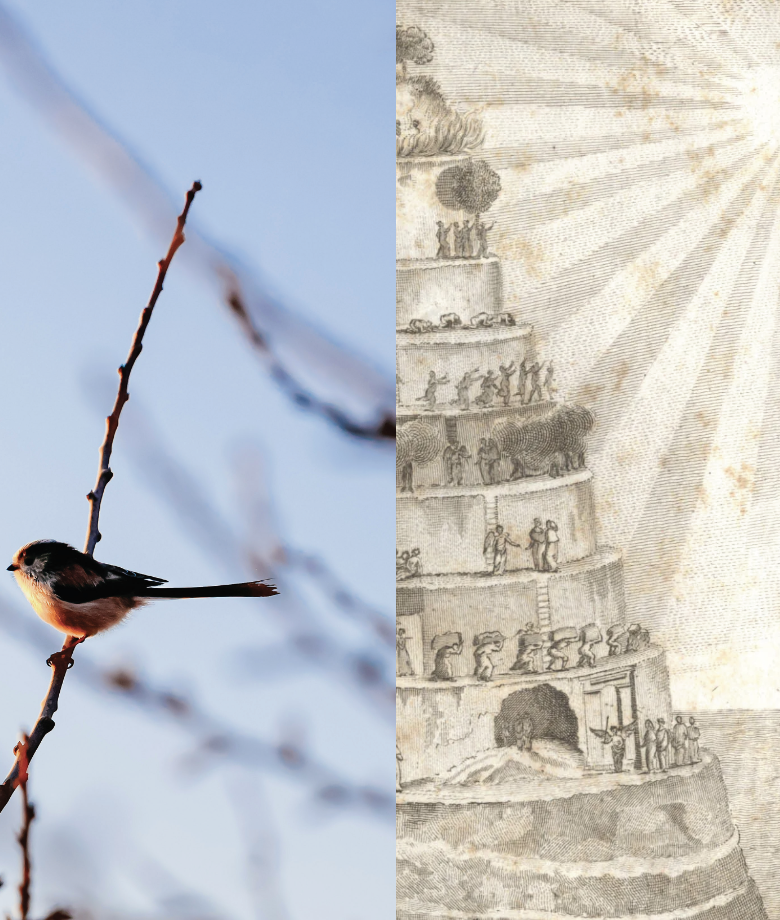
Module 2 - Earth-World
Residential: 22nd January - 1st February 2027, Umbria, Italy
Travelling into Purgatorio, the middle-realm of his universe, Dante discovers the powers, ambiguities and extraordinary energies of love, as that which moves all things. Poetry becomes the visionary faculties of wonder, hope, astonishment and the making of kinship. His journey ends with the discovering of a place that symbolises the possibilities of love, where humans and nature exist in harmony with one another.
This module explores the role of humans as a work to learn how to love, and thus to weave, forge and affirm our relationships with one another and with the world. The Earth-World teaches that to love is to embody, to move, to make, to learn, to change, to sing, to flourish and in doing so, to give voice to others. Through poems, stories and song, we will engage in this polyphony of creative actions and ask: what is the relationship between poetic creativity and listening and responding to the others and to the earth? Can creativity and imagination contribute to a flourishing world, human and more-than-human?
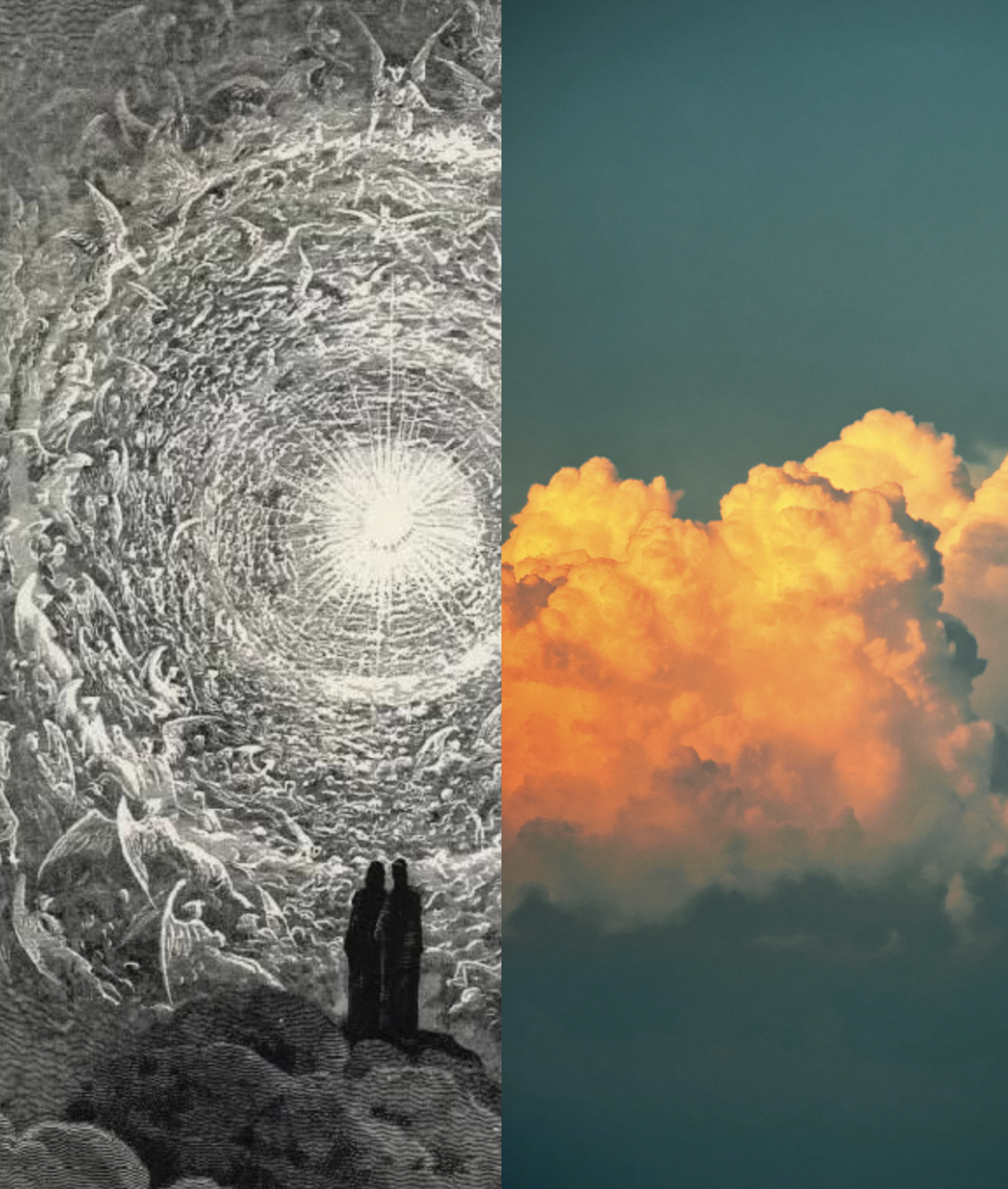
Module 3 - Otherworld
Residential: 5th -17th April 2027
Led by his beloved Beatrice, Dante transmutes into an otherworld, as the mysterious yet intimately present reality which nourishes our everyday lives. The poetic imagination emerges as a vehicle for justice, goodness and wholesome resistance to imperialist ambition and corruption. Through encounters with ancestors and old friends, kings and beggars, young and old, white roses and great rivers of light, the poem ends as mystical song to the heart of all being – love itself.
A creative interpretation of Paradiso, the last part of the Divine Comedy, this module explores the poetic relationship between the strange and the everyday, the mundane and the mysterious, the intimate and the universal. What is the otherworld, and why is it present in so many literary traditions, from fairy tales and ancient theatre to contemporary works? Through an exploration the otherworld’s enduring and sustaining presence in story, poetry, mythology and mystical traditions, this module will present offers the poetic imagination as one way into this irreducible mystery. The poetic imagination, we will discover, is a faculty fit not just for creativity, but for mutual nourishment and dialogue, and as an ability to invoke and maintain justice in the world, for celebrating the perpetual miracle of love and the urgent and indispensable work of forgiveness.
Leading this Course

Dr Valentin Gerlier
Dr Valentin Gerlier, scholar, songwriter, and musician, led the MA Poetics of Imagination programme at Schumacher College and Dartington Arts School. He is also a Tutor and academic board member at the Temenos Academy, a Research Associate at the Margaret Beaufort Institute, Cambridge, and a Visiting Lecturer at several institutions. His latest book is Shakespeare and the Grace of Words (Routledge, 2022).
Valentin's teaching and writing span a wide range of subjects, including Shakespeare, William Blake, Dante, Rainer Maria Rilke, Kathleen Raine, Samuel Taylor Coleridge, W.B. Yeats, Ivan Illich, Heraclitus, John Scotus Eriugena, Nicholas of Cusa, and the Western contemplative and mystical traditions. His current research explores the poetic wisdom of nature in pre-modern texts (e.g., Eriugena, Hildegard of Bingen, and Bernardus Sylvestris), contemplative philosophies of nature, and the poetics and metaphysics of ritual and liturgy.
Valentin holds an MA from the University of Kent and a PhD from the University of Cambridge. He has published in journals such as Journal of the Philosophy of Education, Heythrop Journal, Religions, Medieval Mystical Theology, Temenos Academy Review, and Modern Theology.
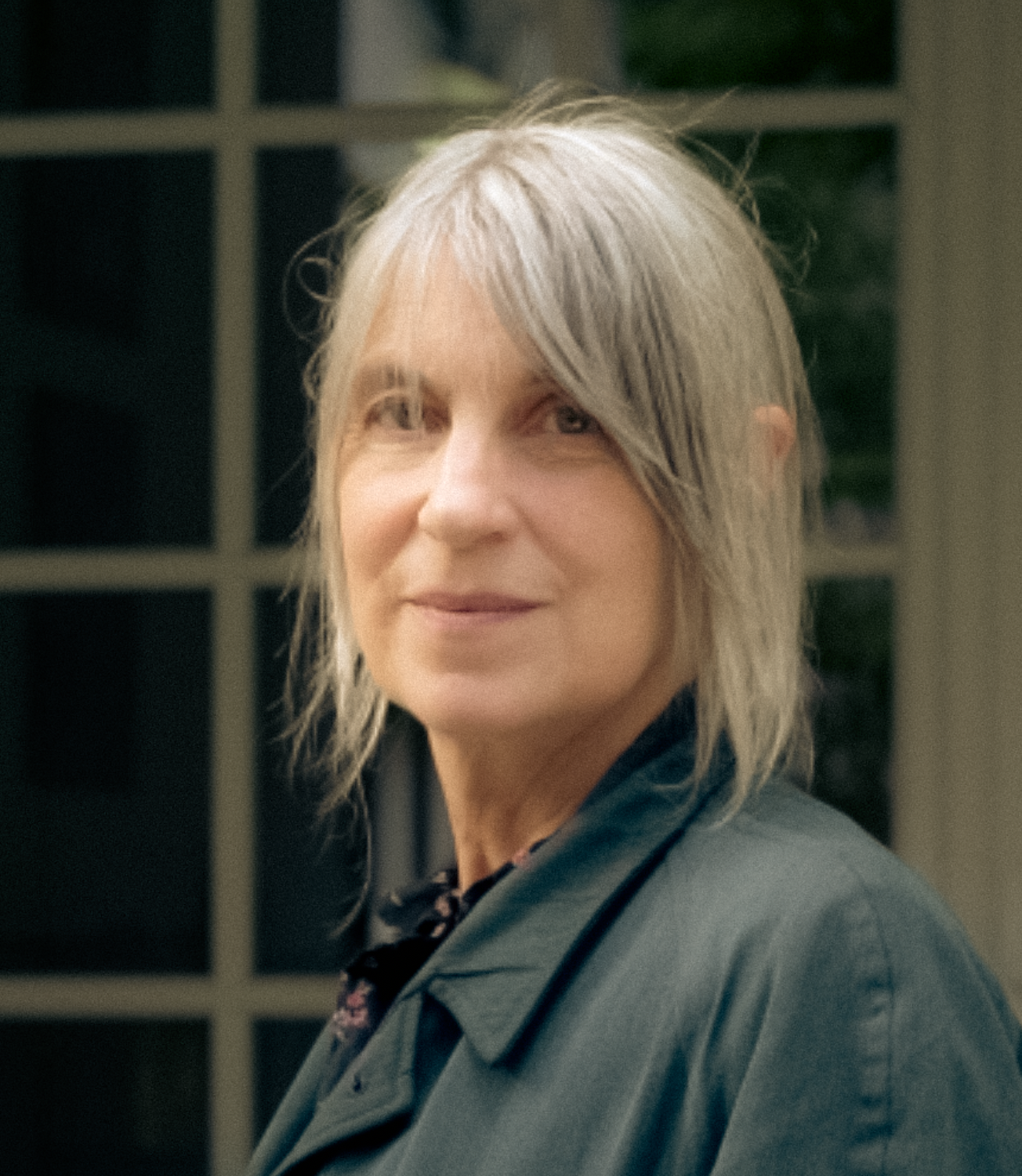
Alice Oswald
Alice Oswald co-led MA poetics of Imagination at Schumacher College and Dartington Arts School. She studied Classics at Oxford and then trained as a gardener. She has written six collections of poetry.
In 2019, she took up the post of Oxford Professor of Poetry. Her most recent collection, Nobody, reworks Homer's The Odyssey. Her first collection, The Thing in the Gap-Stone Stile (1996), won the Forward poetry prize for best first collection. In 2002, she won the TS Eliot for Dart, about the river in Devon.
