

Soundscapes of Life:
Creating a Resonant World through Deep Listening and Sonic Rewilding
20th January - 24th February, 2027
Online
An immersive course exploring the role that soundscape design, and the art and practice of deep listening, can play in creating pathways to more resonant futures.
Key Information
-
This is an online course.
-
Wednesday 20th January - Wednesday 24th February, 2027.
-
£330. Bursaries are available for those on low income or the unwaged.
-
The course comprises six online weekly sessions of 1.5 hours each, held at 18.00 - 19.30 GMT each week.
Course Overview
Listening can change the world! This course offers new ways of engaging with the environmental issues of our time. Taking the belief that we can no longer approach possible solutions from a single sense modality perspective as our starting point, in this course we will develop our deep listening skills and explore the concept of ‘sonic rewilding’ together.
The world we have created, and the associated challenges that have resulted stem, in part, from the fact that we have allowed one sense to dominate – the visual sense. Using soundscape analysis, and the art and practice of listening, we will explore how getting back in touch with our other senses can help create new ways of engaging with some of the most pressing challenges we face. Our current polycrisis has its own soundscape, and by listening closely, we can work towards creating a more balanced harmonic world together.
Whilst this course focuses on sound, the approach we will be using results from a type of listening which is more than the simple act of hearing – it is a corporeal and embodied practice which is accessible to all.
Through a focus on the theory and practice of Resonance, advanced by German sociologist Hartmut Rosa, and by exploring human impacts on the global environment, this course will show how listening can be used to create what Rosa calls: ‘spheres of resonance’ which present opportunities for the emergence of entirely new relationship with the world and, possibly, a truly regenerative and flourishing future.


Course Structure
This course includes six online weekly sessions of 1.5 hours each, held every Wednesday between 20th January to the 24th February, 18.00 - 19.30 GMT. The sessions will include a mixture of small group discussions, embodied exercises, journaling prompts and one optional at-home activity or exercise a week for the times between meetings to practice at your own time and pace. The following outline provides an indication of session content:
Wintering: grounding ourselves in the cyclical
Lingering: moving into the spaces between actions
Darkness: embracing stories of the night
Transition: embodying the threshold
Rest: politicising unproductivity
Stillness: nourishment in the quiet
Why Join This Course?
At the start of the New Year, this course is designed to provide resilience and a sense of renewal as we collectively turn towards the unknown of the year ahead.
When we only see the light and cannot embrace the darkness, winter or the fallow times of our lives, we miss half the story. Endless action, without sufficient rest, can lead to burn out and disenchantment. When we are constantly overwhelmed our actions in the world become reactive rather than truly responsive.
In times of uncertainty, challenge and crises, we can seek strength through the community of fellow travellers, supporting us to renew our vows and find the courage and inspiration to continue on our path. Finding spaces in which to reflect, integrate and digest the journey we are on can help us clarify our direction and better understand what’s needed next. Embracing the spaces between our stories, allows us the freedom to honour what has been and shape what will become.
Fee
The course cost is £330 for six online sessions.
Bursaries are available for those who feel that this course would be particularly beneficial to them but are otherwise unable to access it for financial reasons. Please contact info@schumachercollege.co.uk for more information and tell us a little about how wintering may help you on your journey.


Facilitators
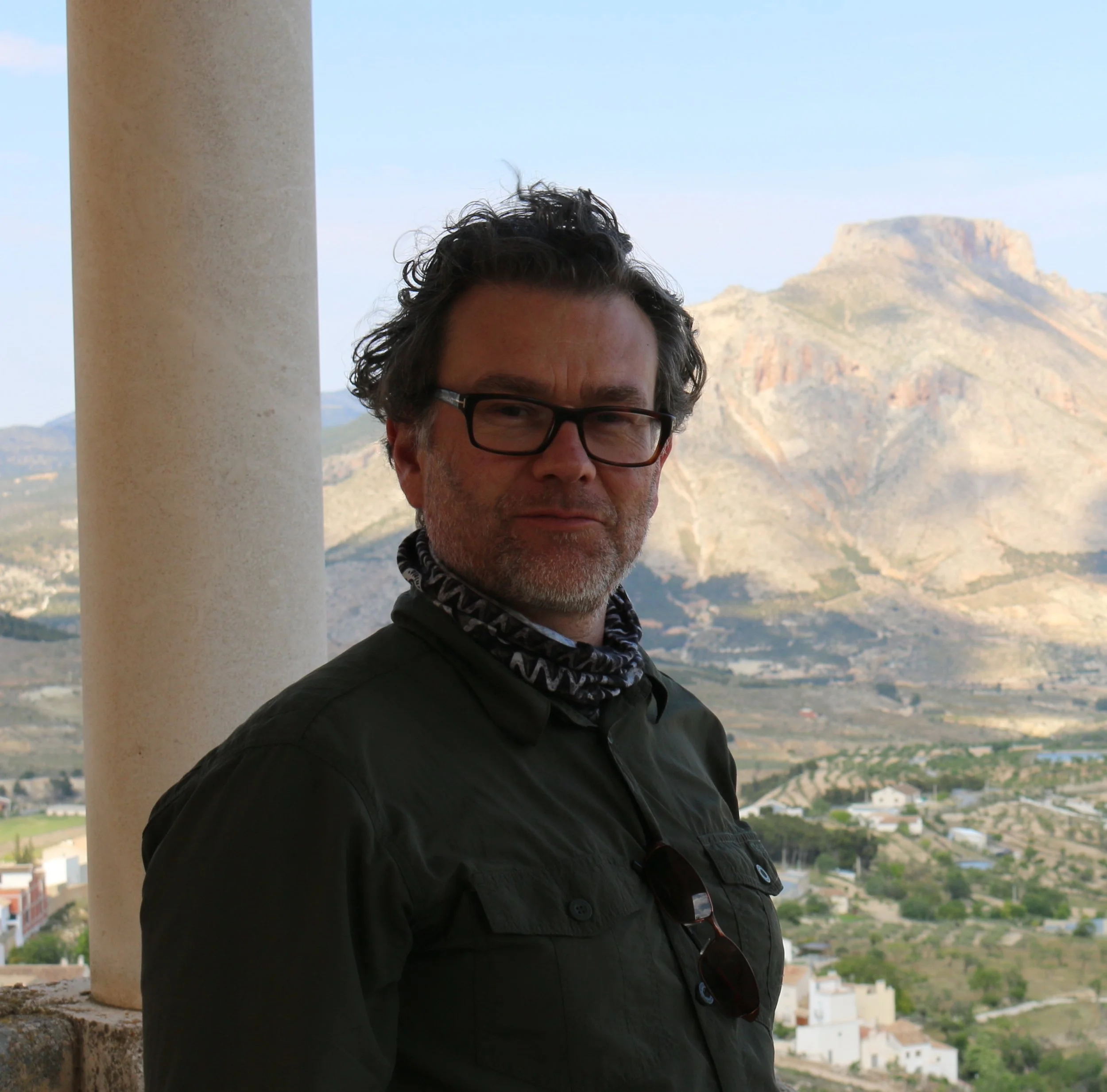
Mike Edwards
Mike Edwards is an interdisciplinary climate change researcher, musician, and educator working at the intersection of ecology, sound, culture, and power. He began his career researching the impacts of climate change in the island states of the Southwest Pacific. His work - referenced by the Intergovernmental Panel on Climate Change (IPCC) - was among the first to explore the issue of ecocolonialism.
Mike’s environmental philosophy was profoundly shaped by his work with First Nations artists in Australia, whose relationship to country offered a lived, relational model of ecological belonging. This model inspired Mike to become a didgeridoo player and to use sound, breath, and resonance to explore questions of connection, place, and listening. He is considered one of the world’s foremost contemporary players and has performed all over the world.
Alongside his artistic practice, Mike has held senior advisory roles in climate change policy. He was, for example, Climate Change Advisor to The Elders Foundation where he provided expert advice to the likes of Gro Harlem Brundtland, Kofi Annan, and President Jimmy Carter amongst others. He was closely involved in The Elders’ climate work in the lead-up to COP21 in Paris. In the same year – 2015 - Mike co-founded Sound Matters, an organisation dedicated to sonic rewilding, regenerative soundscaping, and the teaching of Integral Listening (IL). His book, ‘Soundscapes of Life - Deep Listening to the World Around Us’ was published by Routledge in December 2025 and forms the basis of his current work with Land Art Agency & Collective.
Frequently Asked Questions
-
Anyone who wants to come together in an accessible way to find connection with others and renew a shared sense of value and purpose.
Activists and those working in the field of climate and social change who want to feel supported to balance their outer work with care for themselves.
Anyone going through a life transition such as retirement, relationship break up, illness, or another change in circumstance.
Those who may struggle with the season of winter ordinarily.
People not living in the Northern Hemisphere who want to engage with the themes of transition and rest.
-
No, we welcome people from all backgrounds. Please let us know if you have any specific needs and we’ll do our very best to ensure you feel fully welcomed and cared for in the group.
-
This is a six week online course, with each session lasting 1.5 hours and with an exercise / activity each week to practice in your own time. You are invited to reflect and practice some of the topics explored in between sessions as well but this is optional.
-
As this is a reflective course, you may like to bring a notebook and any materials that may help you to process the discussions shared. A cosy warm tea and blanket may help ease you into the evening sessions too!